

-
PRODCUTS
-
APPLICATION
-
SERVICE
Understanding Filament Winding Machines: Innovations in Composite Manufacturing
Nov 11,2025
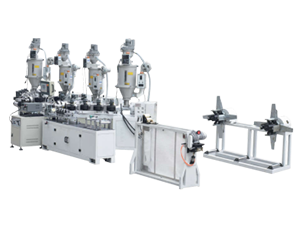
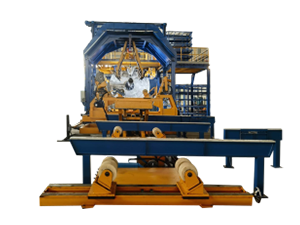
Filament winding machines are pivotal technology in the manufacturing sector, particularly in the production of composite materials. These machines are designed to create intricate structures by wrapping continuous strands of fibers, typically carbon or glass, around a rotating mandrel. This method ensures that the resulting product has superior strength-to-weight ratios, making it ideal for various applications, including aerospace, automotive, and marine industries.
One of the key advantages of filament winding machines is their ability to produce components with uniform material distribution. This uniformity is crucial in maintaining structural integrity and ensuring that the final product meets performance specifications. The process can be tailored to specific requirements by adjusting the winding angle, tension, and speed, thereby optimizing the mechanical properties of the composite material.
In recent years, advancements in automation and control technologies have significantly improved the capabilities of filament winding machines. Modern systems often incorporate sophisticated software that allows for precise programming of the winding patterns. This not only enhances repeatability and reduces waste but also enables manufacturers to produce complex geometries that were previously difficult to achieve. As a result, businesses can respond more flexibly to market demands and innovate faster in their product development cycles.
Another important aspect of filament winding machines is their efficiency. By utilizing continuous fiber reinforcements, these machines reduce the amount of material waste compared to traditional manufacturing methods. In an era where sustainability is paramount, the ability to produce high-quality composites with minimal waste is a significant advantage that attracts manufacturers looking to enhance their environmental responsibility.
Moreover, the integration of Industry 4.0 principles into filament winding technology is transforming manufacturing processes. Real-time monitoring and data analytics enable operators to track production performance, predict maintenance needs, and further refine the winding process. This level of connectivity not only enhances operational efficiency but also contributes to quality assurance by ensuring that each component meets strict compliance standards.
Training for operators of filament winding machines is also critical. As technology evolves, ensuring that personnel are well-equipped with the necessary skills to operate these advanced machines becomes essential. Companies often invest in specialized training programs that cover both machine operation and the underlying principles of composite materials, ensuring that their workforce can maximize the benefits of the technology.
In conclusion, filament winding machines represent a significant advancement in composite manufacturing, providing enhanced efficiency, precision, and customization capabilities. As industries continue to embrace these technologies, understanding the intricacies of filament winding processes will be crucial for manufacturers aiming to stay competitive in the evolving marketplace. By leveraging these machines, businesses can innovate and produce high-quality composite components that meet the demands of diverse applications.
One of the key advantages of filament winding machines is their ability to produce components with uniform material distribution. This uniformity is crucial in maintaining structural integrity and ensuring that the final product meets performance specifications. The process can be tailored to specific requirements by adjusting the winding angle, tension, and speed, thereby optimizing the mechanical properties of the composite material.
In recent years, advancements in automation and control technologies have significantly improved the capabilities of filament winding machines. Modern systems often incorporate sophisticated software that allows for precise programming of the winding patterns. This not only enhances repeatability and reduces waste but also enables manufacturers to produce complex geometries that were previously difficult to achieve. As a result, businesses can respond more flexibly to market demands and innovate faster in their product development cycles.
Another important aspect of filament winding machines is their efficiency. By utilizing continuous fiber reinforcements, these machines reduce the amount of material waste compared to traditional manufacturing methods. In an era where sustainability is paramount, the ability to produce high-quality composites with minimal waste is a significant advantage that attracts manufacturers looking to enhance their environmental responsibility.
Moreover, the integration of Industry 4.0 principles into filament winding technology is transforming manufacturing processes. Real-time monitoring and data analytics enable operators to track production performance, predict maintenance needs, and further refine the winding process. This level of connectivity not only enhances operational efficiency but also contributes to quality assurance by ensuring that each component meets strict compliance standards.
Training for operators of filament winding machines is also critical. As technology evolves, ensuring that personnel are well-equipped with the necessary skills to operate these advanced machines becomes essential. Companies often invest in specialized training programs that cover both machine operation and the underlying principles of composite materials, ensuring that their workforce can maximize the benefits of the technology.
In conclusion, filament winding machines represent a significant advancement in composite manufacturing, providing enhanced efficiency, precision, and customization capabilities. As industries continue to embrace these technologies, understanding the intricacies of filament winding processes will be crucial for manufacturers aiming to stay competitive in the evolving marketplace. By leveraging these machines, businesses can innovate and produce high-quality composite components that meet the demands of diverse applications.
Contact Us
E-mail:
Phone/Wechat/WhatsApp
Address:
A2-1408, Kaichuang Avenue to Tai Plaza, Huangpu District, Guangzhou City, Guangdong Province
Related Posts


No. 20, Jiangjiang Avenue, Huadu District, Guangzhou City, Guangdong Province, China
sales@huacmachine.com


Huachuang Intelligent Technology