

-
PRODCUTS
-
APPLICATION
-
SERVICE
The Impact of Industry 4.0 on Pipes Production Lines: Transforming Manufacturing Efficiency and Innovation
Oct 01,2024
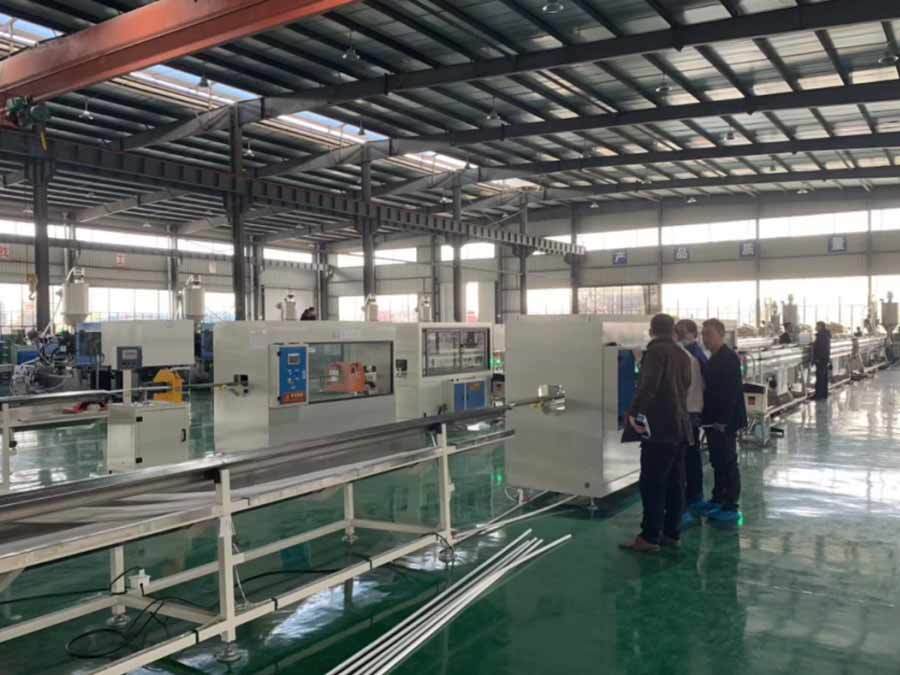
By automating processes and optimizing workflows, manufacturers can significantly improve production efficiency. Real-time monitoring of machinery and processes allows for quicker identification of bottlenecks and operational issues.
Advanced sensors and data analytics enable continuous quality monitoring throughout the production process. This proactive approach helps in reducing defects and ensuring that the final products meet stringent quality standards.
Through efficient resource management and minimized downtime, companies can achieve substantial cost savings. Predictive maintenance powered by AI can foresee equipment failures, reducing unexpected repair costs and production delays.
The connectivity provided by IoT allows for better tracking of materials and products throughout the supply chain. This transparency leads to improved inventory management and faster response times to market changes.
IoT devices facilitate seamless communication between machines and systems, allowing for real-time data collection and analysis. This connectivity enhances decision-making processes and operational efficiency.
AI algorithms analyze vast amounts of data to provide insights that optimize production processes. Machine learning applications can predict equipment failures and suggest operational adjustments.
Cloud technology allows for centralized data storage and easy access to information across different units of a manufacturing operation, promoting collaboration and data-driven decision-making.
Robots in pipes production streamline tasks, reduce labor costs, and ensure precision in manufacturing processes. Automation increases output while minimizing human error.
Automation and robotics play a vital role in enhancing productivity on pipes production lines. The integration of robotic systems into manufacturing processes has transformed traditional production methods.
Predictive analytics leverages historical data to forecast future outcomes. In pipes production, it helps anticipate equipment failures or maintenance needs, allowing manufacturers to take proactive measures.
Real-time data collection from sensors and machines enables manufacturers to monitor production processes continuously. This insight facilitates immediate adjustments to maximize efficiency and quality.
AI-driven quality assurance systems analyze production data to detect anomalies and ensure adherence to quality standards. This results in enhanced product quality and reduced wastage.
Company X implemented IoT-enabled sensors throughout its production line, allowing for real-time monitoring of machinery and immediate identification of faults. This led to a 30% reduction in downtime and a 20% increase in overall efficiency.
Company Y incorporated AI-driven analytics to optimize their supply chain, resulting in a 15% decrease in production costs. The use of predictive maintenance also led to fewer equipment failures, enhancing overall productivity.
Integrating new technologies into existing systems can be complex. A phased approach to implementation, starting with pilot projects, can ease this transition.
With increased connectivity comes the risk of cyber threats. Employing robust cybersecurity measures and regular audits can help mitigate these risks.
The rapid advancement of technology necessitates a workforce skilled in modern manufacturing techniques. Investing in training and development programs will be key to bridging this skills gap.
The impact of Industry 4.0 on pipes production lines is profound, driving innovation and efficiency in manufacturing processes. As companies embrace advanced technologies, they will not only enhance productivity but also adapt to the evolving demands of the market. By understanding and leveraging the benefits of Industry 4.0, the pipes manufacturing industry can pave the way for a more efficient, agile, and sustainable future.
Contact Us
E-mail:
Phone/Wechat/WhatsApp
Address:
A2-1408, Kaichuang Avenue to Tai Plaza, Huangpu District, Guangzhou City, Guangdong Province
Related Posts


No. 20, Jiangjiang Avenue, Huadu District, Guangzhou City, Guangdong Province, China
sales@huacmachine.com


Huachuang Intelligent Technology