

-
PRODCUTS
-
APPLICATION
-
SERVICE
Understanding Filament Winding Machines: Evolution and Applications
Dec 23,2024
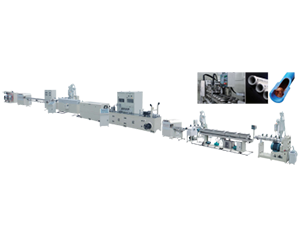
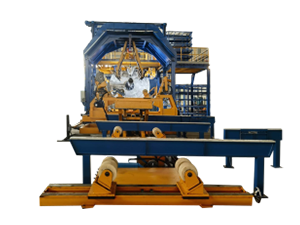
Filament winding machines have become an essential asset in the field of composite material manufacturing. They are specifically designed for the automated production of cylindrical or spherical structures, such as pipes, tanks, and pressure vessels. By understanding the key features and applications of filament winding machines, manufacturers can better assess their potential in enhancing production efficiency and product performance.
One of the primary advantages of using filament winding machines is their ability to create strong, lightweight structures through the precise placement of fibers. The process involves winding continuous strands of reinforcing material, typically fiberglass or carbon fiber, around a rotating mandrel. This technique ensures optimal fiber alignment, which significantly enhances the mechanical properties of the finished product. Consequently, components produced using this method can achieve superior strength-to-weight ratios, making them ideal for industries such as aerospace, automotive, and marine.
Moreover, filament winding machines offer versatility in terms of design and customization. Manufacturers can easily modify the winding patterns, fiber angles, and resin types to meet specific performance requirements. This adaptability allows for the production of complex geometries and tailored properties, catering to the unique needs of different applications.
Another significant benefit of filament winding machines is their ability to automate the manufacturing process. Automation reduces human error, increases consistency, and enhances overall productivity. With advanced control systems and software, these machines can be programmed to execute precise winding sequences, monitor the curing process, and even conduct quality checks. As a result, manufacturers can achieve higher throughput and lower production costs while maintaining product quality.
In addition to their efficiency and adaptability, filament winding machines contribute to sustainability efforts in the manufacturing sector. The use of composite materials can lead to reduced energy consumption and lower greenhouse gas emissions compared to traditional materials. Moreover, the ability to recycle carbon fibers and resins further supports eco-friendly practices in the industry.
In conclusion, filament winding machines play a crucial role in modern manufacturing, especially in applications requiring high-strength, lightweight components. Their ability to automate production, customize designs, and improve material performance makes them invaluable in diverse sectors. As industries continue to seek innovative solutions to enhance efficiency and sustainability, filament winding technology will undoubtedly remain at the forefront of advancements in composite material manufacturing.
PREVIOUS:
Contact Us
E-mail:
Phone/Wechat/WhatsApp
Address:
A2-1408, Kaichuang Avenue to Tai Plaza, Huangpu District, Guangzhou City, Guangdong Province
Related Posts


No. 20, Jiangjiang Avenue, Huadu District, Guangzhou City, Guangdong Province, China
sales@huacmachine.com


Huachuang Intelligent Technology