

-
PRODCUTS
-
APPLICATION
-
SERVICE
Understanding the Essentials of Filament Winding Machines
Oct 04,2024
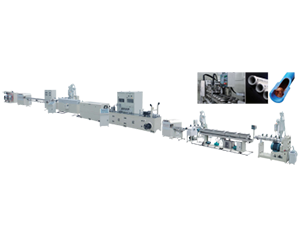
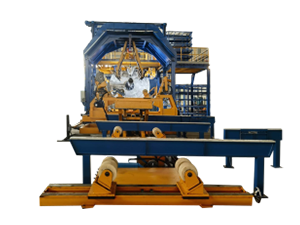
Filament winding machines are sophisticated pieces of equipment extensively utilized in the manufacturing sector, particularly for producing composite materials. These machines are designed to wind continuous strands of fiber, often impregnated with resin, around a rotating mandrel to create composite structures. This method is particularly favored for its ability to produce lightweight yet strong components suitable for various applications, including aerospace, automotive, and marine industries.
One of the primary advantages of filament winding is its capacity to tailor the fiber orientation and pattern, which directly influences the mechanical properties of the final product. By adjusting the winding angle and tension, manufacturers can create parts that meet specific performance criteria, such as increased strength or durability. This flexibility makes filament winding machines indispensable in industries where performance and reliability are paramount.
Filament winding technology operates on a few key principles. The process generally involves several stages: preparing the mandrel, selecting the appropriate fibers and resins, and then executing the winding operation. The mandrel serves as the core shape that the fiber will adhere to, and it can be made of various materials depending on the application. Once the mandrel is prepared, layers of fiber are wound around it in a predetermined pattern, often in multiple layers, to achieve the desired thickness and structural integrity.
In addition to customizability, filament winding machines also enhance manufacturing efficiency. The automated nature of these machines allows for high production rates with consistent quality. This reduces human error and the need for extensive manual labor, ultimately minimizing production costs. The ability to produce complex geometries with precision further boosts their appeal as a reliable manufacturing solution.
The applications of filament winding are numerous. Industries such as aerospace utilize it to create lightweight aircraft components, while the automotive sector applies the technology in the production of fuel tanks and structural parts that require high strength-to-weight ratios. In the energy sector, filament-wound products like pressure vessels and composite pipes play a crucial role in enhancing operational efficiency and safety.
In conclusion, filament winding machines represent a significant advancement in manufacturing technology, offering a combination of strength, lightweight characteristics, and design flexibility. As industries continue to demand higher performance and efficiency, understanding the capabilities and applications of filament winding will be essential for businesses looking to stay competitive. Investing in this technology can lead to innovative solutions that meet the ever-evolving needs of modern engineering challenges.
One of the primary advantages of filament winding is its capacity to tailor the fiber orientation and pattern, which directly influences the mechanical properties of the final product. By adjusting the winding angle and tension, manufacturers can create parts that meet specific performance criteria, such as increased strength or durability. This flexibility makes filament winding machines indispensable in industries where performance and reliability are paramount.
Filament winding technology operates on a few key principles. The process generally involves several stages: preparing the mandrel, selecting the appropriate fibers and resins, and then executing the winding operation. The mandrel serves as the core shape that the fiber will adhere to, and it can be made of various materials depending on the application. Once the mandrel is prepared, layers of fiber are wound around it in a predetermined pattern, often in multiple layers, to achieve the desired thickness and structural integrity.
In addition to customizability, filament winding machines also enhance manufacturing efficiency. The automated nature of these machines allows for high production rates with consistent quality. This reduces human error and the need for extensive manual labor, ultimately minimizing production costs. The ability to produce complex geometries with precision further boosts their appeal as a reliable manufacturing solution.
The applications of filament winding are numerous. Industries such as aerospace utilize it to create lightweight aircraft components, while the automotive sector applies the technology in the production of fuel tanks and structural parts that require high strength-to-weight ratios. In the energy sector, filament-wound products like pressure vessels and composite pipes play a crucial role in enhancing operational efficiency and safety.
In conclusion, filament winding machines represent a significant advancement in manufacturing technology, offering a combination of strength, lightweight characteristics, and design flexibility. As industries continue to demand higher performance and efficiency, understanding the capabilities and applications of filament winding will be essential for businesses looking to stay competitive. Investing in this technology can lead to innovative solutions that meet the ever-evolving needs of modern engineering challenges.
Contact Us
E-mail:
Phone/Wechat/WhatsApp
Address:
A2-1408, Kaichuang Avenue to Tai Plaza, Huangpu District, Guangzhou City, Guangdong Province
Related Posts


No. 20, Jiangjiang Avenue, Huadu District, Guangzhou City, Guangdong Province, China
sales@huacmachine.com


Huachuang Intelligent Technology